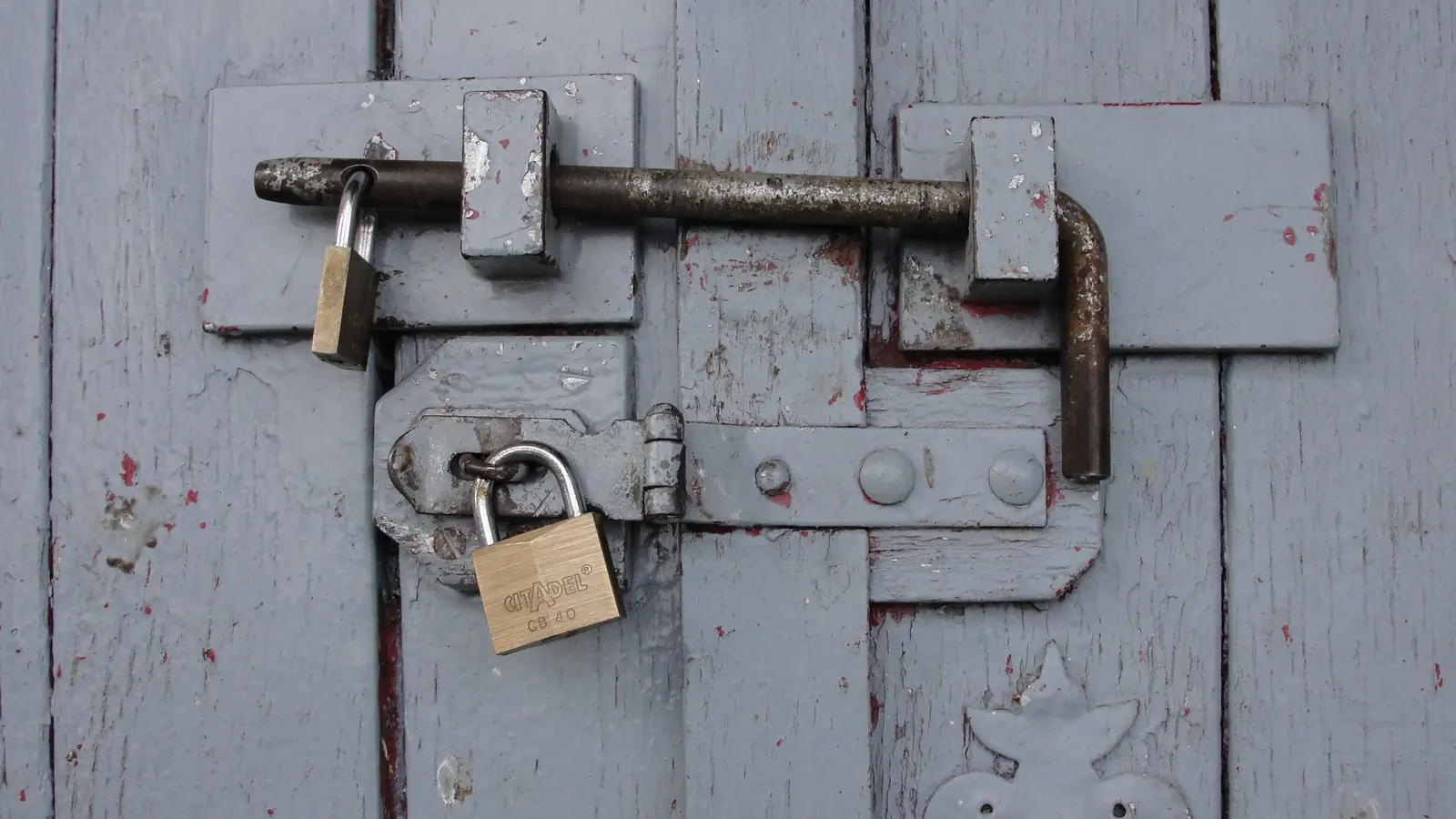
VoIP security comes down to protecting four things: the accounts that control your phone system, your phone bill (from toll fraud), the calls themselves (with encryption), and the people answering them (from vishing and spoofed caller ID). For most small businesses, the highest-value steps are multifactor authentication on every admin login, blocking international and premium-rate calling you don't need, and confirming that your provider encrypts calls with TLS and SRTP. Everything else in this guide builds on those three.
Is VoIP secure?
A business VoIP system can be as secure as a landline or more secure, but only if it is configured that way. A landline is hard to tap without physical access to the wire. A VoIP call is data on an IP network, so it can be encrypted, which a plain analog line is not, but it can also be reached from anywhere on the internet if the system is exposed.
The difference is mostly about who controls what. With a hosted (cloud) phone system, the provider runs the servers, patches them and usually encrypts calls by default, while you control user accounts, permissions and calling rules. With a self-managed IP PBX on SIP trunks, you are responsible for nearly everything. If you are not sure how the pieces connect, our explainer on how VoIP works covers the SIP signaling and RTP voice streams this guide refers to.
What are the biggest VoIP security threats?
| Threat | What it looks like | Main defense |
|---|---|---|
| Toll fraud | Someone uses your system to place large volumes of calls to expensive international or premium-rate numbers, often overnight or on a weekend. You get the bill. | Block destinations you don't call, set spend alerts, strong credentials |
| SIP account takeover | Attackers guess or steal the SIP username and password of a phone or extension and register their own device as you. | Long unique SIP secrets, IP allowlisting, no internet-exposed SIP ports on self-hosted systems |
| Admin portal takeover | A phished admin password gives an attacker control of forwarding, users, call recordings and calling permissions. | Phishing-resistant MFA, SSO, fewer admins |
| Vishing and caller ID spoofing | A caller pretends to be your bank, a vendor or your CEO, sometimes with a spoofed number or an AI-generated voice. | Call-back verification procedures, staff training, STIR/SHAKEN labeling |
| Eavesdropping | Unencrypted voice traffic captured on a network and replayed as audio. | TLS for signaling, SRTP for media |
| Denial of service (DoS and TDoS) | Floods of traffic or calls that tie up lines so real callers cannot get through. | Provider-side filtering, call rate limits, a backup route for critical numbers |
Toll fraud
Toll fraud is the threat that costs small businesses real money fastest, because the charges land on your account whether or not you authorized the calls. A common form is International Revenue Share Fraud (IRSF): the attacker sends calls to high-cost numbers where someone shares in the termination revenue.
The Communications Fraud Control Association (CFCA), an industry group, surveys telecom operators about fraud losses every two years. In its 2019 survey, CFCA estimated global telecom fraud losses at $28.3 billion, with IRSF at $5.04 billion and both PBX hacking and IP PBX hacking each estimated at $1.82 billion as methods. A summary of the 2025 survey published by TNS puts total losses at $41.82 billion, up from $38.95 billion in 2023, with account takeover alone at $4.73 billion. These are operator-reported, survey-based estimates across the whole telecom industry, not just business VoIP, so treat them as an order of magnitude rather than a precise figure.
SIP account takeover
Every VoIP phone or softphone registers to a server with a SIP username and password. If those credentials are weak (for example the extension number as the username and something short as the password), automated tools on the internet can guess them. Once in, an attacker can register a phone as your extension and place calls on your account.
SIP account takeover is most likely with self-managed systems whose SIP port is open to the whole internet. In widely shared 2009 guidance on the asterisk-users mailing list, Digium's John Todd called strong passwords "probably the most important step you can take", and also advised making SIP usernames different from extension numbers and allowing "only one or two calls at a time per SIP entity, where possible", so a compromised account cannot run dozens of calls at once.
Admin portal takeover
With cloud phone systems, the admin web portal is the most valuable target. Whoever controls it can forward your main number, add users, download call recordings and switch on international calling. That is why multifactor authentication on admin accounts matters more than almost any network setting. CISA's guidance for small and medium businesses says to start MFA with admin accounts and to use phishing-resistant methods, such as hardware security keys, where available.
Vishing and caller ID spoofing
Vishing (voice phishing) targets people rather than systems. Caller ID is easy to fake, so a call can display your bank's number or your own company's main line. The FCC's rules under the Truth in Caller ID Act prohibit spoofing "with the intent to defraud, cause harm or wrongly obtain anything of value", with penalties of up to $10,000 per violation, but the law does not stop the call from reaching you.
AI voice cloning makes this harder. In a May 2025 public service announcement, the FBI warned that since April 2025 attackers had sent AI-generated voice messages impersonating senior US officials to gain access to accounts. The FBI's advice applies to any business: verify by calling back a number you already know, do not click links sent in messages, and never share a two-factor code with anyone.
Eavesdropping
Plain RTP (the protocol that carries VoIP audio) is not encrypted. Anyone who can capture the packets on a network segment can reassemble the conversation. SRTP, defined in IETF RFC 3711, adds encryption, message authentication and replay protection to those voice streams. SIP signaling (who is calling whom, plus the keys for SRTP) should be protected with TLS, which by default runs on port 5061 under RFC 3261.
Denial of service
CISA's fact sheet on telephony denial of service (TDoS) lists the tools attackers use to flood phone lines with calls, including botnets, VoIP services and compromised PBXs. The fact sheet is written for 911 centers, but the same techniques can tie up a business's main number. Cloud providers absorb most network-level floods. What you can control is a fallback: a second route or number for critical inbound lines and a provider contact who can apply filtering quickly.
What does STIR/SHAKEN do, and what doesn't it do?
STIR/SHAKEN is a caller ID authentication framework. According to the FCC, the originating carrier digitally "signs" the caller ID on calls carried over IP networks, and the receiving carrier verifies the signature. The FCC required voice service providers to implement it in the IP portions of their networks by June 30, 2021, and has since extended the obligation to gateway providers and to intermediate providers that receive unauthenticated calls directly from originating providers.
Each signed call carries an attestation level, defined in IETF RFC 8588 and the ATIS standard it references:
- A (full): the provider knows the customer and that the customer is entitled to use the calling number.
- B (partial): the provider knows the customer but cannot confirm the customer's right to that number.
- C (gateway): the provider is passing the call along, for example from an international gateway, and cannot verify its source.
What STIR/SHAKEN does not do matters just as much:
- It does not block calls. Blocking and "Spam Likely" labels are decisions by the receiving carrier and its analytics. Bandwidth notes that analytics weigh STIR/SHAKEN differently, so even an A-attested call can be labeled spam.
- It does not prove a caller is honest. It confirms that a provider vouches for the number. A scammer using a number they legitimately obtained can still get a valid signature.
- It does not cover old networks. The FCC says STIR/SHAKEN "is only operational in IP networks", so calls that cross non-IP segments can lose authentication.
- It does not encrypt anything. It signs caller ID. It does nothing for the privacy of the call audio.
- It does not protect a hijacked account. Calls placed through your compromised account are signed as yours.
For your own outbound calls, ask your provider which attestation level your calls receive. If the provider sending your calls cannot confirm your right to the numbers you display (for example, numbers hosted with another carrier), your calls may only get B attestation, which can affect how receiving carriers' analytics treat them. Our guide to SIP trunk providers covers this for businesses that bring their own phone system.
How are VoIP calls encrypted with TLS and SRTP?
Two protocols do most of the work. TLS encrypts SIP signaling between phones and the server, so an observer cannot see who is calling whom or steal the media keys. SRTP encrypts the voice packets. You want both. TLS without SRTP leaves the audio readable, and SRTP without TLS can expose the keys used to encrypt the audio.
Some large cloud platforms encrypt by default. Microsoft, for example, documents that Teams encrypts signaling with TLS and media with SRTP, with keys exchanged over the TLS channel. On self-managed systems and some SIP trunks, encryption is optional and often off, so check each leg: phone to PBX, PBX to SIP trunk, and remote softphones.
Two limits to know. First, encryption usually covers the path between your devices and your provider. When a call goes out to a regular phone number, it continues over carrier networks, and you should not assume it stays encrypted all the way to the other person. Second, call recordings, voicemails and transcripts are stored data. Ask how they are encrypted at rest, who can access them, and how long they are kept.
How do you secure VoIP admin accounts?
- MFA on every admin account, then every user. Use the strongest option the platform supports. CISA ranks hardware security keys above authenticator apps, and both above text-message codes.
- Single sign-on (SSO). If you use Microsoft 365 or Google Workspace, connect the phone system to it so that disabling an employee's main account also cuts off their phone access.
- Least privilege. Most platforms have several admin roles. Give full admin to one or two people and narrower roles (billing, user management, reporting) to everyone else. Twilio, for example, restricts changes to its international dialing permissions to Owner and Administrator roles.
- Offboarding. Remove departed employees the same day, reassign their numbers, and check forwarding rules they set up.
- Audit logs. Turn them on and check who changed forwarding, calling permissions or recording settings.
- API keys and integrations. CRM and helpdesk integrations often hold tokens with broad access. Review them like admin accounts. Our VoIP integrations guide covers what those connections can reach.
How do you prevent VoIP toll fraud?
- Turn off international calling for everyone who doesn't need it. Allow specific countries for the few users who do. Twilio, for example, classifies certain number ranges as high risk for toll fraud and advises that most businesses never need to call them.
- Block premium-rate and high-cost ranges. Even when international calling is on, block destinations your business never calls.
- Set spending limits and alerts. Ask your provider for a daily or monthly cap and an alert when usage jumps. A fraud run that starts Friday night should not be discovered on Monday's invoice.
- Restrict after-hours calling. If nobody calls abroad at 3 a.m., a time-of-day rule can block it.
- Lock down voicemail and call forwarding. Require strong voicemail PINs. Limit or disable forwarding to external numbers, and disable remote dial-out features (sometimes called DISA) you don't use.
- Ask about liability. Find out in writing whether your provider monitors for fraud, what it does when it detects it, and who pays for fraudulent calls.
How do you secure a self-managed IP PBX or SIP trunk?
If you run your own PBX (Asterisk, FreePBX, 3CX or similar) on SIP trunks, the provider cannot protect you from configuration mistakes. The basics:
- Do not expose SIP ports (5060 and 5061) or the PBX admin web page to the whole internet. Allow only your SIP trunk provider's IP addresses and your office or VPN ranges.
- Use long, random SIP secrets for every extension. Never use the extension number as the password, and avoid using the extension number as the SIP username.
- Disable anonymous or guest calls and limit simultaneous calls per extension.
- Patch the PBX software and phone firmware on a schedule, and remove services you don't use.
- Change default passwords on every desk phone's web interface, and secure the provisioning server that hands out phone configurations.
- Put phones on their own network segment (a voice VLAN) so a compromised laptop cannot reach them directly.
- Turn on TLS and SRTP on each leg that supports it, including the trunk.
If that list looks like more than your team can maintain, a hosted system moves most of it to the provider. Our guide to VoIP for small business covers that trade-off.
What should you ask a VoIP provider about security?
| Ask for | Why it matters |
|---|---|
| A current SOC 2 Type 2 report (under NDA if needed) | SOC 2 is an AICPA attestation framework. A Type 2 report covers how controls operated over a period of time, not just on one date. Read the scope and the exceptions, not just the cover page. |
| ISO/IEC 27001 certificate | Shows an audited information security management system. Check which services and locations the certificate covers. |
| A signed HIPAA business associate agreement (BAA), if you handle health information | HHS says a cloud provider that stores electronic protected health information is a business associate even if the data is encrypted and the provider cannot read it. The "conduit" exception covers transmission-only services, so a provider that keeps voicemails, recordings or transcripts with patient information needs a BAA. |
| Encryption defaults | Is TLS and SRTP on by default for desk phones, apps and trunks? Are recordings and voicemails encrypted at rest? |
| MFA and SSO enforcement | Can you require MFA for all users, connect your identity provider, and set granular admin roles? |
| Data residency and retention | Where are recordings, voicemails and transcripts stored, and can you set how long they are kept and delete them? |
| Fraud controls | International and premium-rate blocking, spend caps, real-time alerts, and the provider's policy on fraudulent charges. |
| STIR/SHAKEN attestation | What attestation level your outbound calls get, which affects how often they are labeled spam. |
| Audit logs and incident notice | How long admin logs are kept, and how quickly the provider will tell you about a breach affecting your account. |
Security questions are one part of a wider provider evaluation. See our guide to choosing a VoIP provider for the rest of the list.
VoIP security checklist
- MFA is required on every admin account, preferably with a security key or authenticator app.
- The phone system uses your company SSO, and offboarding removes phone access the same day.
- No more than two full admins. Everyone else has a narrower role.
- International calling is off by default and allowed only for named users and countries.
- Premium-rate and high-risk destinations are blocked.
- A spend cap and usage alert are set with the provider.
- Voicemail PINs are not defaults or simple patterns, and external call forwarding is limited.
- TLS and SRTP are confirmed on desk phones, softphones, mobile apps and trunks.
- Recordings and voicemails have a retention period, and access is limited.
- On self-managed systems: SIP and admin ports are restricted to known IPs, SIP secrets are long and random, firmware is patched, and phones are on a voice VLAN.
- Staff know to verify unusual requests by calling back a known number, and never share one-time codes.
- You have a SOC 2 report, and a BAA if you handle health information.
- Audit logs are on and reviewed monthly.
- E911 locations and notifications are set up. See our guide to VoIP E911 requirements.
What are the most common VoIP security mistakes?
- Leaving international calling on for everyone because it was the default during setup.
- Treating the admin portal like any other web login, with a shared password and no MFA.
- Assuming STIR/SHAKEN stops spoofed calls. It helps carriers label calls. It does not stop a convincing caller.
- Assuming encryption is on. Check each leg, especially SIP trunks and third-party desk phones.
- Keeping call recordings forever without a reason, which turns them into a liability if an account is compromised.
- Forgetting departed employees, whose forwarding rules and softphone logins keep working.
Choosing a phone system? See the main providers' current plans side by side.
Compare VoIP providers →Frequently asked questions
Is VoIP more secure than a landline?
It can be. VoIP calls can be encrypted with TLS and SRTP, which a plain analog line does not offer, but a VoIP system can also be reached over the internet if it is misconfigured. A well-run cloud phone system with MFA and encryption on is a strong setup, and a self-hosted PBX with open SIP ports and weak passwords is not.
What is VoIP toll fraud?
Toll fraud is when someone uses your phone system to place calls you pay for, usually to expensive international or premium-rate numbers. A common version, International Revenue Share Fraud, sends calls to numbers where the fraudster shares in the revenue. Blocking destinations you don't need, setting spend alerts and using strong credentials are the main defenses.
Does STIR/SHAKEN stop spoofed calls?
Not by itself. STIR/SHAKEN lets carriers verify that the caller ID on an IP call was signed by a provider that vouches for it, which helps them label or block suspicious calls. It does not block calls, does not work on non-IP network segments, and cannot tell whether a caller with a legitimately signed number is honest.
Are VoIP calls encrypted?
Only if the system is set up to encrypt them. Some large cloud platforms, such as Microsoft Teams, encrypt signaling with TLS and voice with SRTP by default, while self-managed PBXs and some SIP trunks leave encryption optional. Encryption usually covers the path to your provider, not the whole route to an outside phone number.
Do I need a BAA for VoIP under HIPAA?
If your VoIP provider stores protected health information, such as voicemails, call recordings or transcripts that mention patients, HHS guidance treats it as a business associate and you need a signed business associate agreement. The conduit exception only covers transmission-only services. Ask the provider for a BAA before you turn on recording or transcription.
What is the single most important VoIP security setting?
For a cloud phone system, multifactor authentication on every admin account, because whoever controls the admin portal controls forwarding, recordings and calling permissions. For a self-managed PBX, keeping SIP ports closed to the open internet and using long, random SIP passwords comes first. In both cases, turning off international calling you don't use is a close second.
Sources
- FCC: Combating Spoofed Robocalls with Caller ID Authentication (STIR/SHAKEN)
- FCC: Caller ID Spoofing (Truth in Caller ID Act rules and penalties)
- IETF RFC 8588: PASSporT extension for SHAKEN (attestation levels A, B, C)
- Bandwidth: The ABCs of attestation and analytics
- IETF RFC 3711: The Secure Real-time Transport Protocol (SRTP)
- IETF RFC 3261: SIP, including SIP over TLS on port 5061
- Microsoft Learn: Security and Microsoft Teams (TLS and SRTP)
- CFCA: Putting telecom fraud loss into perspective (2019 Global Fraud Loss Survey figures)
- TNS: summary of the CFCA 2025 Fraud Loss Survey (January 2026)
- FBI IC3 public service announcement I-051525-PSA: smishing and AI voice vishing impersonating senior US officials (May 15, 2025)
- CISA: Cyber Risks to 911: Telephony Denial of Service (fact sheet)
- CISA: Require Multifactor Authentication (small and medium businesses)
- Twilio: Voice Dialing Geographic Permissions (toll fraud)
- asterisk-users mailing list: Six steps to better SIP security with Asterisk
- HHS: Guidance on HIPAA and Cloud Computing (business associates, conduit exception)
- AICPA and CIMA: System and Organization Controls (SOC) suite of services